I began the day with a double Armenian coffee that I made in the kitchen today. I took it out to the garden and enjoyed it with my ICA neighbours Nalan and Refik, two Turkish citizens. Nalan works for Amnesty International and Refik is a curator. We had an enjoyable chat, despite sharing our rather depressing stories about the state of the world.
I then headed out to see the Tsitsenagaberd memorial and the museum. (www.genocide-museum.am) The approach was impressive but I approached from the administrative side of the building, which is not as well maintained as it should be. The building is beautiful, with the clear intention of making a huge impression on visitors. Yet the fountains, as with many other fountains in Yerevan, are not running. Graffiti is on the walls. And stonework needs repair. This building of all buildings should be maintained.
I came upon a man from Singapore, who had the same difficulty as I did in finding the entry point to the museum and the Eternal flame. He directed me to walk around 180 degrees, which was very helpful. (Apparently Google Maps often uses administrative building addresses, so I would have had better luck if I had searched for the museum instead of the keyword Tsitsenagaberd.)
The memorial complex has three main structures : the Temple of Eternity, the Memorial Column (rising to a pinpoint), and the memorial wall. The Temple of Eternity had scaffolding when I visited, so I couldn’t fully appreciate its effect.
The museum itself was very well organized, including the history of massacres leading up to the genocide of 1915, stories of resistance as well as violent victimization, and the international attention and support Armenia received thanks to some extraordinary individuals.
Of special note was a room dedicated to Aurora (Arshaluys) Mardiganyan’s memoir “Ravished Armenia” and the remaining 20 minutes of footage that exists from the Hollywood film “Auction of Souls” remarkably produced in 1920, in Aurora starred only a few years after surviving the genocide. The museum doesn’t go into details, but Arshaluys’ story is remarkable.
Also interesting to me was learning that the German government was quietly supporting the genocide. (I do not claim to be a historian.) In fact, some of the officials of that period went on to serve for the Nazis during WW2, making good use of what they had learned during the Armenian genocide.
The museum exhibition concludes with other notable 20th century genocides, as an acknowledgment that there are many such horrific acts that have occurred around the world: Armenians as well as all the others must not be forgotten. Sadly, it seems that we may choose not to forget, but this doesn’t prevent such events from recurring, even as the world watches in real time.
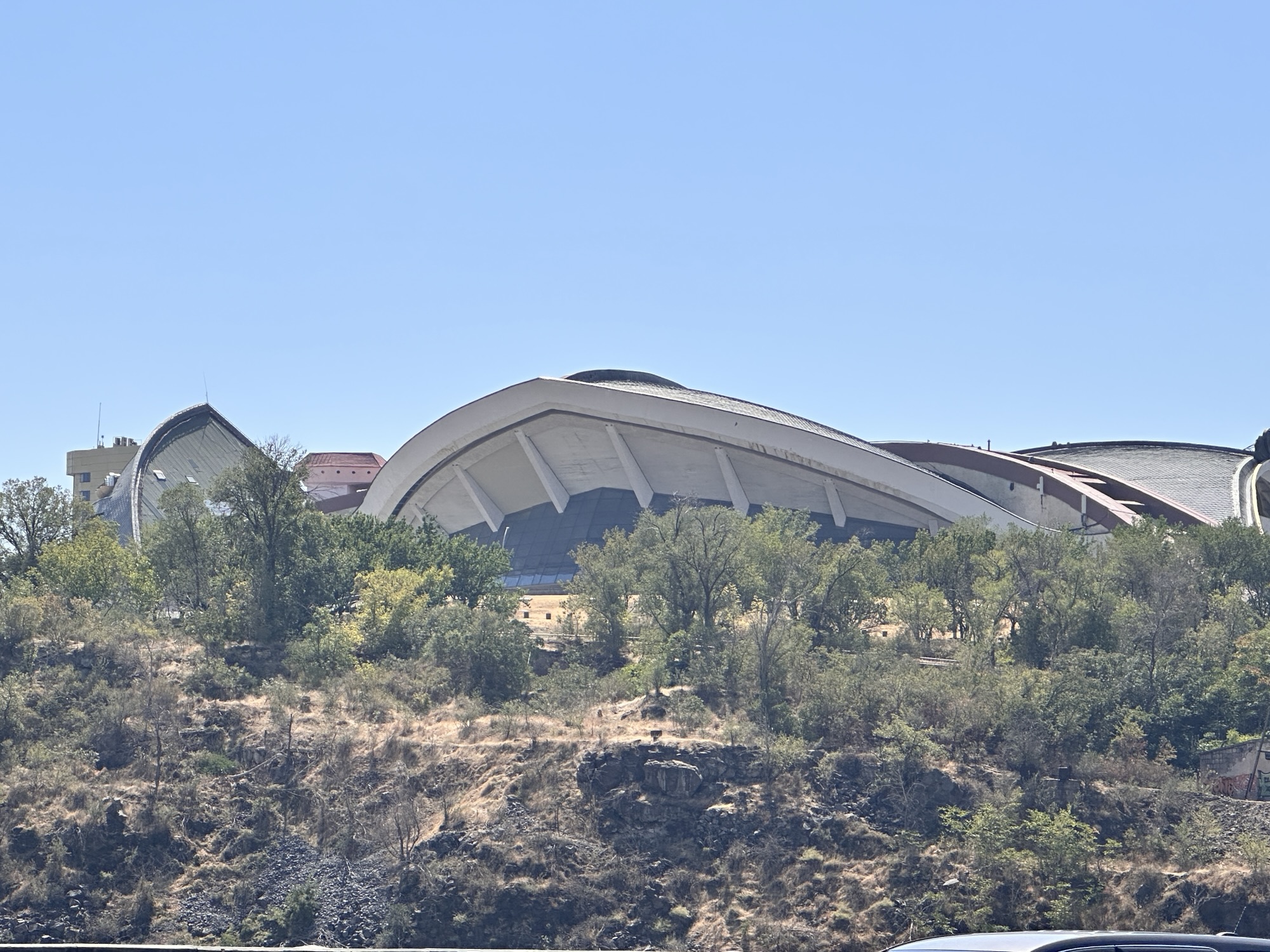
Next, I walked down to the Hrazdan Gorge and walked the path to the Kond Tunnel. This 600 metre long passageway connects the gorge to the city and is noted for its graffiti. Along the way, I discovered an outdoor gym, a pool in the gorge, and a neglected children’s railway and amusement park.
Once in the city, I walked over to the AVC office and took in one hour of language classes before heading to my miniature painting class at 7 pm. I was home by 9:45 pm; satisfied with a day well spent!


Leave a Reply